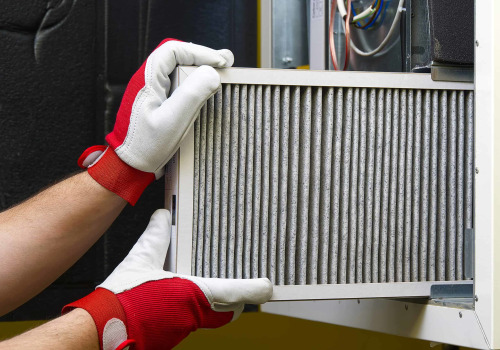
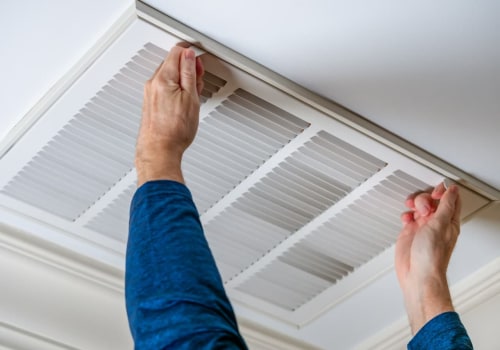
Shake out a pillowcase and you send a puff of dust mite allergen into your bedroom air. From that moment, your furnace filter has roughly 20 to 30 minutes to catch it before most of it drifts back into the carpet and bedding. So yes, furnace filters can remove airborne dust mite allergens, though only the share that reaches your return vent in time. The mites themselves never leave your mattress or couch. Don't take your indoor air for granted, because the part of this problem you can't see is also the part you can fix.
TL;DR Quick Answers
furnace filters
Furnace filters trap dust, pollen, pet dander, and dust mite allergen from the air your HVAC system pulls through its return vent. A snug MERV 11 to 13 filter covers most homes. For heavy mite debris, switch the fan to On while you clean so the filter catches it before it settles.
They only work while air moves: The EPA says HVAC systems usually run less than 25% of the time during heating and cooling seasons.
MERV 11 to 13 is the practical range: Allergists at ACAAI recommend MERV 11 or 12, and the EPA suggests MERV 13 where your system allows.
Fit matters as much as the rating: Gaps around the frame let air slip past the media.
Timing catches mite allergen: Disturbed mite debris settles within about 20 to 30 minutes.
Change it on schedule: A clogged filter chokes airflow and catches less.
Top Takeaways
Mites never leave the fabric. They live in bedding, upholstery, and carpet, so your filter only ever meets their debris.
The airborne window is short. Disturbed mite debris settles within roughly 20 to 30 minutes.
MERV 11 to 13 covers it. Mite particles are big, so fit and runtime matter more than chasing a higher number.
Fan timing multiplies results. Keep the system fan on while you clean and for half an hour after.
Bedroom control comes first. Barrier covers, weekly hot washes, and humidity under 50 percent pull more allergen out of your home than any filter can.
Why the Mites Never Reach Your Filter
Dust mites are tiny relatives of spiders, too small to see, and they feed on the skin flakes everyone sheds. They burrow into mattresses, pillows, upholstered furniture, and carpet, and that's where they stay. What makes you sneeze is protein in their droppings and decaying bodies. Allergists call the main culprits Der p 1 and Der f 1, after the two most common house mite species, Dermatophagoides pteronyssinus and Dermatophagoides farinae.
Those particles are heavy. The American Lung Association says mite allergen rarely stays in the air and settles fast into dust and fabric, unlike pet allergens, which linger. Everything your filter can and can't do about a dust mite allergy follows from that difference.
What Your Furnace Filter Can and Cannot Catch
What It Can Trap
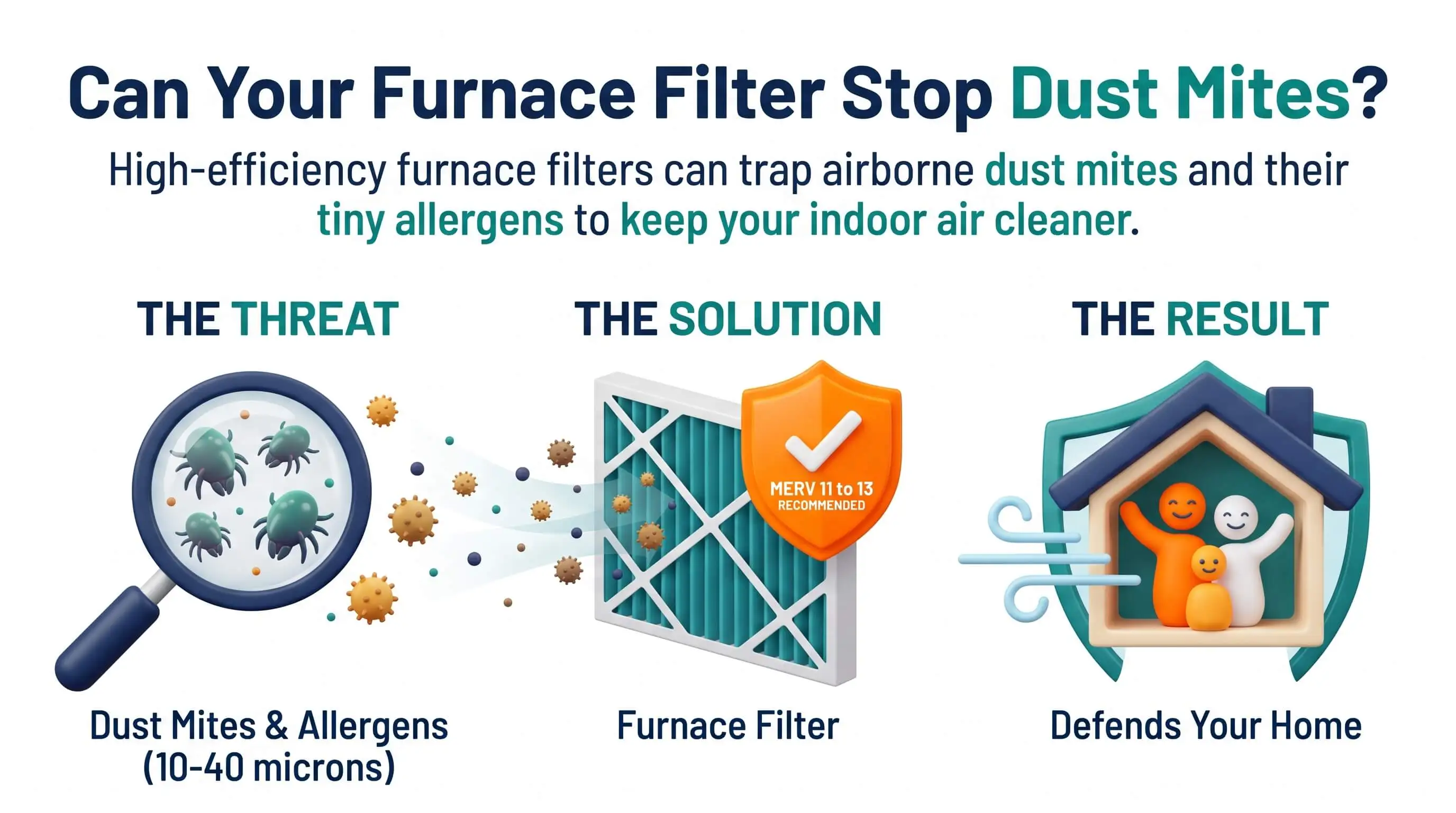
Mite debris runs large, often 10 microns or more. That size works in your favor. A pleated particulate air filter rated MERV 8 or higher grabs particles this big without much trouble, so the allergen your return vent pulls in during a cleaning session stays put in the media.
What It Cannot Reach
Two limits get in the way. Your filter can't touch allergen still buried in a mattress, and it only cleans air while the system runs, which during heating and cooling seasons covers a small slice of the day. Researchers at Children's Mercy Hospital in Kansas City compared furnace filter dust with floor dust from the same homes and found far less mite allergen in the filters. The particles landed before they could travel.
Which MERV Rating Makes Sense for Dust Mite Allergies
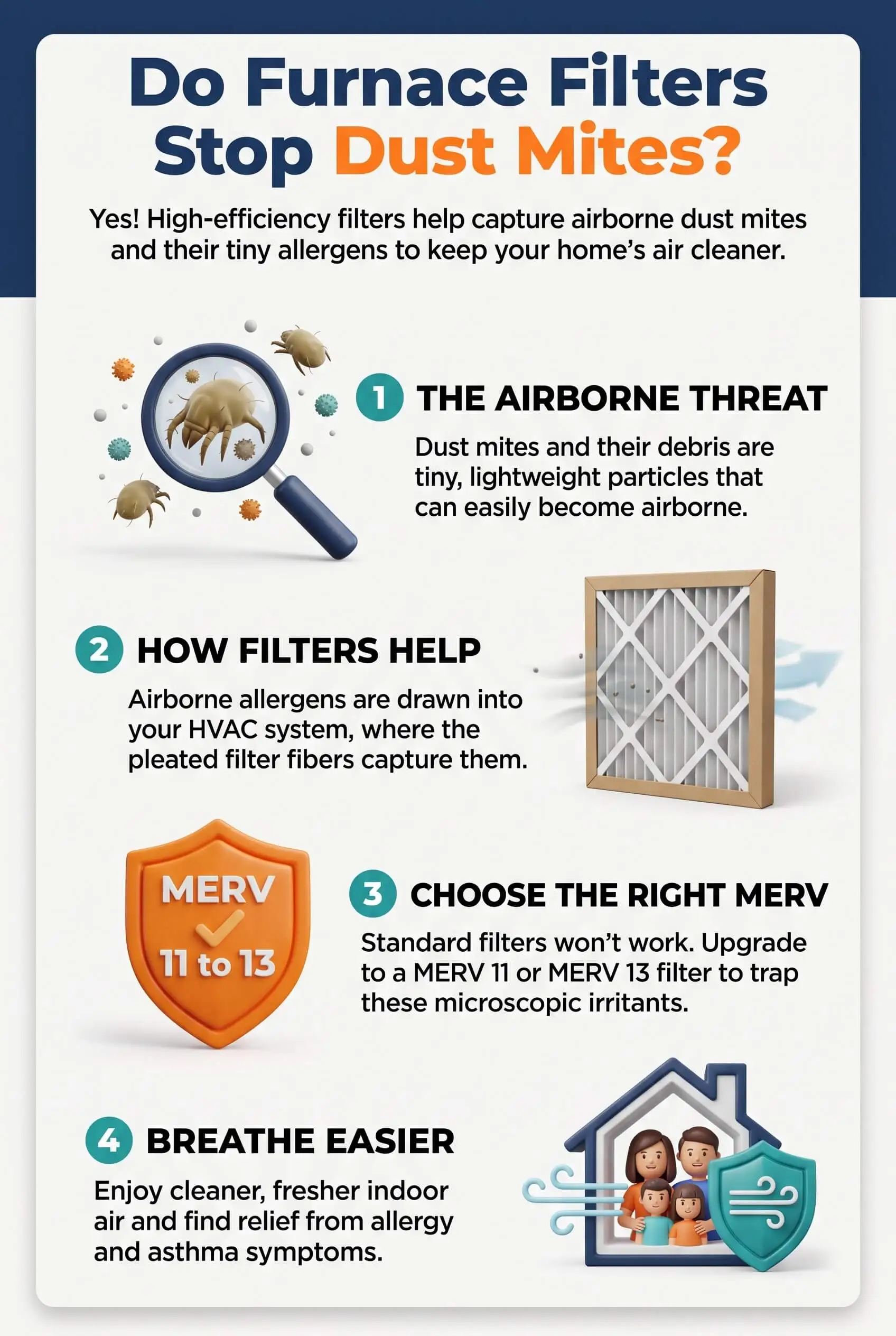
For most homes, I'd aim for MERV 11 to MERV 13. Allergists at ACAAI recommend a MERV 11 or 12 media filter with the system fan left on, while the EPA suggests MERV 13 or the highest rating your fan and filter slot can handle.
Climbing past that range won't buy you much against mite allergen, because the particles are already big enough to catch. Fit matters more. Any gap around the frame lets air sneak past the media, so a snug, properly fitted air filter earns its keep as much as the number on the label. For the airflow tradeoffs of an upgrade, this rundown of MERV 13 filters is worth a read.
How to Help Your Filter Catch More Mite Allergen
You can't stretch the airborne window. You can make sure your system is running during it.
Run the fan while you clean. Flip the thermostat fan from Auto to On before you vacuum, dust, or strip the bed, then let it run about 30 minutes afterward.
Change the filter on schedule. A clogged filter chokes airflow, so follow this 16x25x1 replacement guide or your manufacturer's recommended interval.
Close the gaps. Slide the filter in and check the edges. Light showing around the frame means air is slipping past the media.
Put a HEPA cleaner by the bed. Most mite exposure happens while you sleep, so a portable HEPA unit in the bedroom works right next to the source.
Source Control Does the Heavy Lifting
No filter can reach inside a mattress, which is why allergy organizations aim their strongest advice at the places mites live. Zip your mattress and pillows into allergen-barrier covers. Wash bedding in hot water every week. Keep indoor humidity between 30 and 50 percent, and run a HEPA vacuum over carpets and upholstery. Pair those habits with good filtration and you're protecting your family at the source and during that short airborne window.
When pollen season piles on top of dust mites, this pollen MERV guide shows how one filter handles both.
"In the homes I've assessed, the furnace filter is almost never where dust mite allergen piles up. The debris hits the floor long before it reaches a return. So I tell families to switch the blower to On whenever they change sheets or vacuum, because that half hour is the only time mite particles are airborne, and a properly sized MERV 11 filter handles particles that large easily."
Essential Resources
Each of these seven resources picks up where this page leaves off, from allergist guidance to the habits that cut mite exposure at home.
Furnace Filters Rated MERV 11 and Higher: Start here when your current filter sits below MERV 11 or rattles in its slot. Matching the rating and the exact dimensions to your system is the easiest upgrade you'll make all year.
AAFA: Dust Mite Allergy: An allergist-reviewed, room-by-room plan for cutting mite exposure, from bedding and humidity to whole-home filter picks.
ACAAI: Dust Allergies: Allergists spell out a specific MERV 11 or 12 recommendation here, along with fan settings for whole-home filtration.
Mayo Clinic: Dust Mite Allergy: Explains why symptoms flare while you sleep or clean, the same moments mite allergen gets into the air.
National Center for Healthy Housing: Dust Mites: Prevention from a housing angle, with practical changes to humidity, bedding, and flooring that make a home harder for mites to settle into.
AAAAI: Dust Mite Practice Parameter: The clinical evidence review behind allergist recommendations. It's refreshingly honest about where filtration helps and where it comes up short.
National Jewish Health: Dust Mites: A cleaning and laundry schedule built for children's bedrooms, where mite control pays off most.
Supporting Statistics
Four in five U.S. homes have dust mite allergen in at least one bed. Most of your exposure happens while you sleep, a long way from any return vent, so the bedroom deserves your attention first.
Source: American Lung Association
HVAC filters only clean air while the system runs, usually less than 25% of the time during heating and cooling seasons. Flipping the fan to On while you clean puts those minutes where they count.
Source: U.S. Environmental Protection Agency
Mite allergen in furnace filter dust averaged 240 ng/g, against 625 ng/g in HEPA vacuum dust and 937 ng/g in children's bedroom floor dust. The filters held well under half of what the floors did, which shows how fast mite debris drops out of the air.
Source: Annals of Allergy, Asthma and Immunology via PubMed Central
Final Thoughts and Opinion
I'd get your furnace filter right, but I wouldn't count on it to cure a dust mite allergy. Every allergist source I read for this page points the same way. Mite allergen spends nearly its whole life tucked into fabric, and only a sliver ever rides the airflow back to your return.
Filtration still earns its place, as long as the timing lines up. Here's where I'd put my effort, in this order:
Encase the mattress and pillows, and wash bedding in hot water every week.
Run a snug-fitting MERV 11 to 13 filter, and switch the fan to On whenever you clean.
Keep indoor humidity under 50 percent so mites struggle to survive.
Handle those with properly fitted air filters and your filter finally gets a fair shot at the allergen it can reach.
Frequently Asked Questions
Can a furnace filter get rid of dust mites?
No. Dust mites live in mattresses, pillows, and upholstery, not in the air. Your furnace filter can trap some of the allergen-carrying debris they leave behind once it gets airborne, but it can't remove the mites or the allergen sitting in fabric.
Is MERV 13 better than MERV 11 for dust mite allergies?
Only by a little. MERV 11 already captures mite particles well because they're so large. MERV 13 earns its keep against fine particles like smoke, so pick it when your system handles the airflow and you want broader protection.
Should I run my HVAC fan on to reduce dust mite allergens?
Yes, while you clean or change sheets and for about 30 minutes after. Leaving it on around the clock costs more in electricity, and the EPA notes it can weaken humidity control during the cooling season.
Do I need an air purifier if I have a good furnace filter?
A portable HEPA cleaner in the bedroom helps because it works right next to the source. Allergists treat it as a supplement, though, so pair it with barrier covers, hot washes, and humidity control.
Can dust mites live inside HVAC ducts?
Rarely. According to the AAAAI practice parameter, dust mites seldom survive in forced-air systems, and their fecal pellets are usually too heavy to stay airborne even when a supply vent blows them out.
Give Your Furnace Filter a Real Shot at Dust Mite Allergens
Your furnace filter can remove airborne dust mite allergens, as long as you give it a fair chance to catch them. Check your MERV rating and fit, plan your furnace filter replacement, switch the fan to On the next time you change the sheets, and breathe easier knowing your filter and your bedroom are both working to protect your family.